The Power of Media in Shaping Public Opinion
The media plays a pivotal role in modern society, and its influence on shaping public opinion cannot be overlooked. The media's power stems from its capacity for widespread dissemination and the openness of its information channels; through news reports, commentary articles, social media, and other avenues, the media guides public perception and evaluation of various events and issues. In today's era of information and globalization, the influence of news media has become increasingly prominent, emerging as a vital force for driving social progress and fostering cultural exchange.

Definition and Functions of News Media
Simply put, news media refers to the mediums or platforms used to disseminate news and information. It encompasses a diverse array of forms—including newspapers, magazines, radio, television, and the Internet—and utilizes various formats such as text, images, audio, and video to convey news events, social trends, and cultural phenomena from around the globe to a broad audience.
The functions of news media are multifaceted and significant. First and foremost, it serves as a bridge for information transmission. News media is capable of conveying a wide range of information rapidly and accurately, thereby fulfilling the public's right to be informed and to understand current events. Whether covering major domestic and international occurrences or the trivialities of daily life, news media strives to report on events in real-time, providing the public with comprehensive information services.
Secondly, news media acts as a guide for public opinion. Through its reporting and commentary on news events, the media can influence the public's views and attitudes toward those events, thereby steering the trajectory of public opinion. When major events unfold, news media can utilize in-depth reporting and analysis to help the public grasp the essence of the situation and foster a constructive atmosphere of public discourse.
Furthermore, news media fulfills additional functions, such as serving as a social watchdog and preserving cultural heritage. By exposing and critiquing social phenomena, it promotes social justice and progress; simultaneously, by disseminating cultural knowledge and values, it facilitates the transmission and development of culture.
The Media's Role in Shaping Public Opinion
Promoting Social Progress
As a crucial conduit for information, the media is capable of rapidly conveying the background, details, and relevant perspectives and analyses regarding specific events and issues. Through reporting and commentary, the media provides the public with access to a wealth of information and offers diverse viewpoints and lines of inquiry, thereby broadening intellectual horizons and expanding cognitive boundaries. This process of information dissemination stimulates deeper public discussion and inquiry into various issues, ultimately fostering social progress and development.
Diverse Methods by Which Media Guides Public Opinion
The methods employed by the media to guide public opinion are manifold. Foremost among these is agenda-setting—the practice of utilizing news reporting to determine which issues take precedence in the public consciousness—which remains a common and effective strategy. The media selects certain events to report while ignoring others, thereby influencing the focal points of public attention. For instance, when the media extensively covers environmental pollution issues in a specific region, public attention is drawn to this topic, subsequently triggering widespread discussion regarding environmental protection. This process of "agenda-setting" determines what the public focuses on and contemplates during a particular period. Furthermore, the media's reporting angles and linguistic choices play a pivotal role. The very same event, when presented from different reporting angles, can evoke vastly different sentiments and understandings among the public. Consider, for example, a demolition incident during urban development: if the media adopts the perspective of the displaced residents—highlighting their living hardships and grievances—the public may be prompted to question and critically reflect upon the demolition policies. Conversely, if the media emphasizes the significance of the demolition from the standpoint of urban development—stressing its contribution to enhancing the city's image and infrastructure—public opinion is likely to shift in a different direction. In terms of language, vivid and evocative narratives are more adept at stirring public emotions and fostering a sense of resonance.
Moreover, the media frequently employs formats such as expert commentary and guest interviews to steer public opinion. The specialized knowledge and authoritative standing of experts often incline the public to accept their viewpoints. When the media invites experts in relevant fields to interpret a trending issue, those experts' opinions frequently serve as a crucial basis for public judgment. For instance, within the discourse surrounding healthcare reform, the analysis and evaluation of new policies provided by medical experts can significantly influence the public's level of support for—and expectations regarding—the reform initiatives.
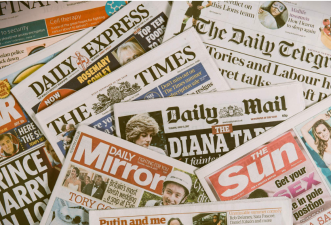
However, the media's role in shaping public opinion is not without its flaws
The primary issue is selective reporting and bias. When selecting stories to cover, the media often bases its choices on its own institutional interests or political leanings, resulting in information that is one-sided and lacking in objectivity. Striking a balance between reporting objectivity and factual accuracy remains a significant challenge confronting the media today. Furthermore, the media is prone to sensationalizing and exaggerating events and issues in an effort to capture the attention of readers and viewers—a phenomenon particularly prevalent in both traditional news outlets and social media platforms.
The media's role in shaping public opinion also extends to the realms of manipulation and guidance
The media possesses the capacity to manipulate public perceptions and emotions through selective reporting and the crafting of leading headlines and accompanying imagery. Such manipulation is not confined solely to news coverage; it also permeates other domains, such as advertising and entertainment programming. As commercial entities, media organizations are often driven by economic interests; consequently, they engage in the selective reporting and promotion of content, thereby influencing public choices and consumer behavior.
Conclusion
In summary, the role of the media in shaping public opinion is of profound significance. Given their extensive reach and the openness of their information channels, media outlets possess the capacity to guide public perception and evaluation of various events and issues. However, this shaping influence is not without its flaws—such as selective reporting and manipulative framing. Therefore, when consuming media content, the public should maintain an objective and rational stance, utilizing diverse information sources for cross-comparison and analysis to formulate their own independent judgments. Concurrently, media organizations must strengthen their self-regulation, enhance the objectivity and veracity of their reporting, and actively fulfill their social responsibilities to provide the public with more comprehensive and accurate information.